Jun 27, 2026
AI-Assisted Image Production

AI-Assisted Image Production: How I Build Images with ChatGPT, Gemini, and Adobe Tools
Over the past year, my image production workflow has evolved significantly. While my foundation remains rooted in traditional photo editing, visual storytelling, image licensing, and creative direction, I now combine those skills with AI tools to accelerate ideation, improve image quality, and solve complex visual challenges.
Rather than relying on a single AI platform, I use a multi-step workflow that combines image analysis, prompt development, image generation, and professional post-production.
My Role
One of the biggest misconceptions about AI image generation is that the quality of the result depends primarily on the prompt. In my experience, the prompt is only one part of a much larger process.
The strongest results come from understanding an image before attempting to change it. Years spent evaluating composition, lighting, image licensing, visual storytelling, brand standards, and editorial quality taught me how to identify what works, what does not, and what should remain untouched. AI has accelerated many parts of the workflow, but it has not replaced the need for visual judgment.
Today, I use AI as both a creative and analytical tool. Before generating new imagery, I often begin by analyzing existing photographs, renderings, screenshots, or design concepts to understand their structure, materials, lighting, perspective, and visual opportunities. This analysis becomes the foundation for prompt development and creative decision-making.
The more I use these tools, the more I find my role shifting from image creator to image director. My responsibility is no longer focused solely on producing pixels. It is about defining objectives, evaluating possibilities, selecting the strongest direction, and ensuring the final image serves both creative and practical goals.
AI can generate countless variations in seconds. Knowing which direction to pursue, which details matter, and how to transform an output into a production-ready visual asset remains the image producer's work.
My Workflow
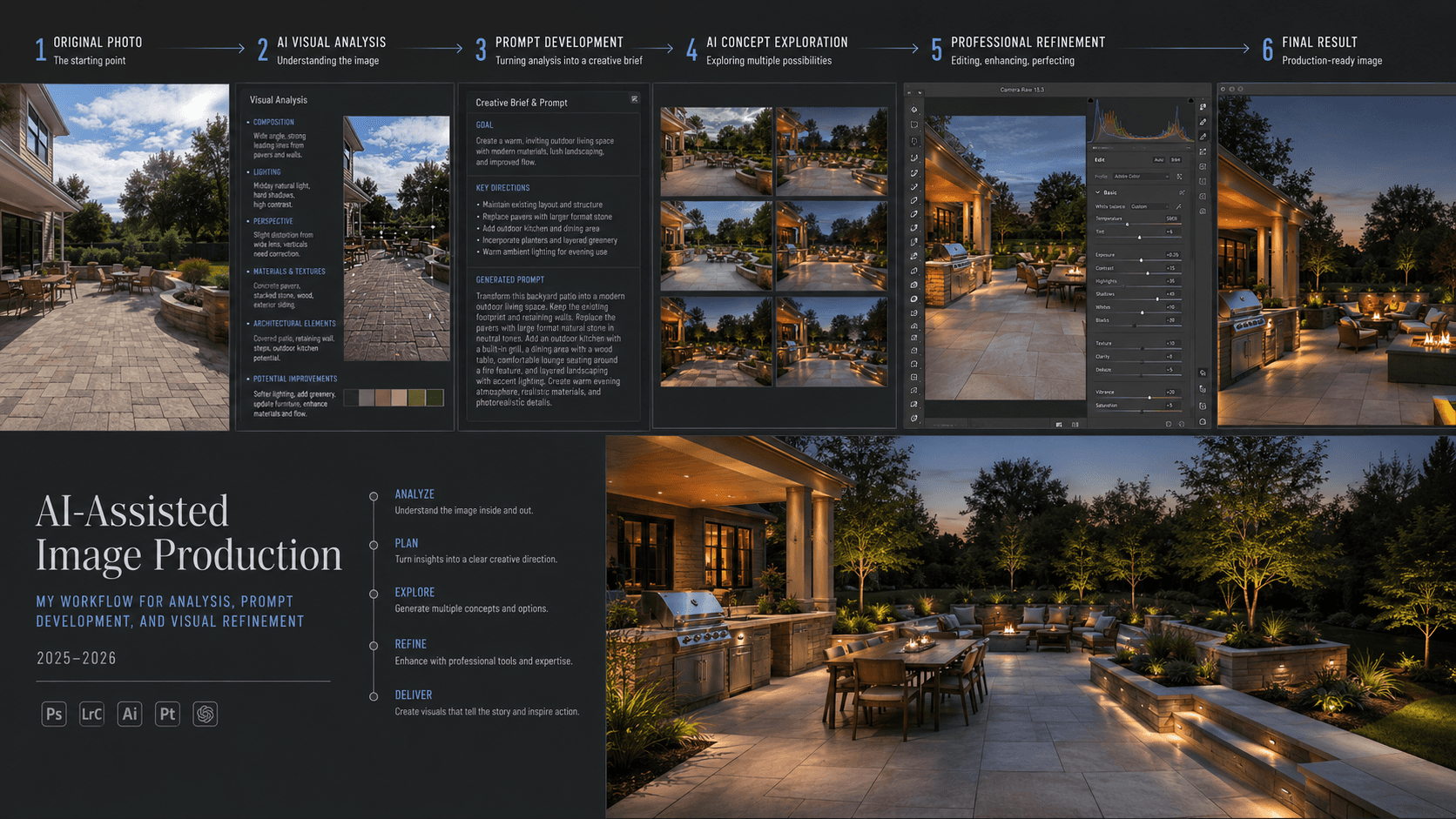
Step 1: Visual Analysis
Every project starts with understanding the image.
I often upload a reference image, screenshot, photograph, rendering, or design concept into ChatGPT or Gemini and ask the model to analyze:
Composition
Lighting
Perspective
Color palette
Materials and textures
Architectural or environmental elements
Potential visual issues
This allows me to create a detailed inventory of what already exists before making any modifications.
Step 2: Prompt Development
Once the image has been analyzed, I collaborate with the AI model to develop a highly specific prompt.
Instead of starting from scratch, I use the visual analysis as the foundation for the prompt.
For example:
Preserve existing architecture
Extend the patio area
Replace materials
Add landscaping
Improve lighting conditions
Create construction visualizations
Modernize interiors
Generate alternate design concepts
The prompt becomes a creative brief generated directly from the image.
Step 3: Multi-Model Iteration
I frequently move between:
ChatGPT
Google Gemini
Adobe Firefly
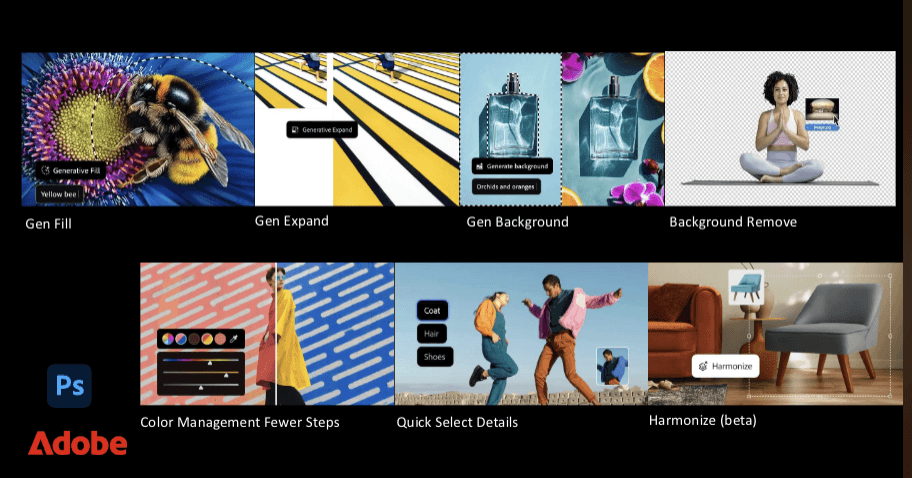
Photoshop Generative Fill
Camera Raw AI tools
Each tool has different strengths.
One model may produce stronger architectural concepts, while another may create more realistic textures or better environmental details.
Rather than relying on a single output, I compare results across platforms and select the strongest visual direction.
Step 4: Professional Refinement
AI generation is only one part of the process.
Final images are refined using professional editing tools, including:
Adobe Photoshop
Adobe Camera Raw
Generative Fill
Generative Expand
Upscaling tools
Noise reduction
Color correction
Exposure balancing
Perspective adjustments
This stage transforms a generated concept into a polished visual asset.
What Has Changed
Traditional image production focused heavily on sourcing, editing, and manual retouching.
Today, I spend more time directing systems than executing every individual task myself.
The creative thinking remains the same:
Understanding the goal
Defining the visual language
Maintaining quality standards
Ensuring accuracy
Delivering a polished final product
What has changed is the speed at which ideas can be explored.
AI allows me to test multiple visual directions within hours rather than days, while maintaining professional creative oversight.
Looking Forward
I believe the future of image production is not about replacing creative professionals.
It is about combining creative expertise with intelligent tools.
The most valuable skill is no longer simply creating images, it is knowing how to analyze, direct, evaluate, refine, and deploy visual content effectively across an evolving AI ecosystem.