Jun 1, 2024
Adobe Integration Creative AI into Editorial Design Workflows
Integrating Creative AI into Editorial Workflows
Artificial intelligence has been part of creative conversations for a while now, but meaningful integration rarely happens by accident. It requires intention, context, and leadership—especially when new tools intersect with established workflows, teams, and standards.
This project began during San Francisco Design Week 2025, where discussions around AI, creativity, and efficiency were everywhere: inspiring, but often abstract. What stood out wasn’t the technology itself, but the gap between possibility and practice. The question wasn’t what AI could do, but how creative teams could realistically use it without losing control, quality, or trust. That question became the foundation for this initiative.
As I spoke with Design Directors across the company, one opportunity became clear: the conversation needed to shift from AI hype to responsible, real-world application. The goal was to help creative teams understand how Adobe’s AI tools could support everyday design workflows—ethically, intentionally, and in a way that added value—by leveraging the corporate membership we already had in place.
I took the initiative to partner directly with Adobe to develop an AI session grounded in real creative workflows. The goal was to deliver content that inspired curiosity while remaining highly practical—particularly for directors balancing creative outcomes with operational realities.
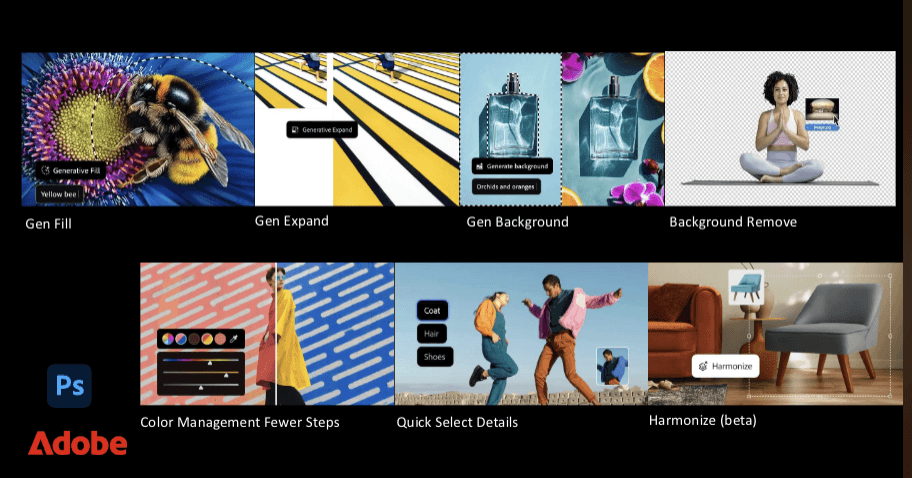
Working with Adobe representative Justin Carlson, we curated a session on new AI features across Adobe’s ecosystem and translated them into clear workflow applications. The focus was on how small process improvements can unlock productivity gains while preserving creative judgment and control.
Key themes included:
Integrating AI into existing workflows
Increasing efficiency without compromising decision-making
Maintaining ethics, trust, and creative control
Frameworks for evaluating adoption and risk
The result was a presentation built for both makers and leaders—designed to support informed, responsible adoption.

From concept through delivery, I owned this initiative end-to-end—leading planning, coordinating cross-team communication, aligning stakeholders, and ensuring the session tied directly to broader organizational priorities. Success wasn’t measured only by the content itself, but by how effectively teams could apply it within real workflows.
After the session, I launched a feedback survey to assess engagement, clarity, and perceived value. The results supported iteration and helped define next steps—reinforcing that responsible AI adoption requires continuous learning, not one-time exposure.
This initiative framed AI as a creative partner, not a replacement, translating complex topics into accessible guidance and practical workflow improvements. What resulted was more than a session—it became a scalable approach for introducing emerging technology with clarity, accountability, and trust.
This project demonstrates my ability to lead without formal authority, align external partners with internal needs, and translate technology into real creative outcomes grounded in ethics, judgment, and business impact.
In fast-moving creative environments, the future doesn’t belong to tools alone—it belongs to the leaders who build systems around them.
Related Post
More stories to explore.